Home remedies for neuropathy in feet and legs: why a whole counter of them never reached my friend's nerves
Turmeric paste. Epsom soaks. Vinegar, castor oil, a cayenne rub that made her cry. My friend Peggy spent a year and a small fortune on home remedies for the burning in her feet and legs. Here is why most of them never got past the skin, and the question about her turmeric that changed everything.


Home remedies for neuropathy in feet and legs were my friend Peggy's second job for a year. She found them the way all of us find things now: at two in the morning, on her phone, with her feet sticking out from under the covers because the sheets felt like sandpaper. She would read about a soak or a paste or a tea, order it before she could talk herself out of it, and try it the next night.
Peggy is 68. We have sat in the same pew at church for fourteen years, and she is the one who brings the lemon bars to every funeral, every baby shower and every Tuesday Bible study whether anyone asked or not. She is practical to her bones. She does not fall for things. Which is why it stopped me cold the morning she carried a canvas grocery bag into my kitchen, set it down, and started unpacking it on my table like evidence.
What a year of home remedies looked like
I counted. Eleven jars, bottles and boxes. A few of them I recognized from my own mother's bathroom. A few I had never heard of. Here is the short list, in the order she tried them, with what she told me about each one:
- Epsom salt foot soaks. "Lovely for twenty minutes. Then I dry off, get in bed, and it starts again."
- Turmeric golden paste, the kind you mix with black pepper and oil and keep in a jar in the fridge. A spoonful every morning for four months. "My teeth turned yellow before my feet noticed anything."
- Apple cider vinegar foot baths. "My whole house smelled like a pickle factory."
- A cayenne rub she made from a video. She washed it off at one in the morning and sat on the edge of the tub crying.
- Castor oil wraps with plastic and socks. "Ruined two sets of sheets."
- Ginger tea, cinnamon, a magnesium spray, a vibrating foot pad, and a B-vitamin from the drugstore.
She had added it up on the back of a church bulletin: a little over four hundred dollars, not counting the sheets. "And every one of them," she said, "helped for an hour. Some of them helped for a night. Not one of them helped for a week."
I want to be careful here, because I've seen people be cruel about this. None of those things are silly. A warm soak really can feel good on aching feet. Ginger and cinnamon are real foods with real research behind them. Turmeric especially, which we'll come back to. Every one of those remedies may help somebody with something. But sitting across from Peggy that morning, looking at her bag, I realized none of them had been aimed at the place where her trouble actually lived.
Why most home remedies stop short of the nerve
Here's the part I didn't understand until that spring, and it's the part you won't find in the little summary box at the top of a search.
Every nerve running down your legs and into your feet is wrapped in a thin protective coating. If you've ever stripped an old lamp cord, you know what it looks like: the copper wire inside, and the plastic sleeve around it. That sleeve is what keeps the signal running cleanly from your toes to your brain, quietly, without leaking or sparking. Your nerves have the same thing, made of fat and protein, wrapped around and around the fiber like tape.
Now think about where Peggy's eleven remedies actually went.
- The soaks, the vinegar, the castor oil and the cayenne all went on the skin. They change what the skin feels for a while. The coating is underneath all of that.
- The teas and the spices went into her stomach, where most of what we eat gets broken down, sorted, and a good part of it simply passed through.
- The vibrating pad and the spray worked on comfort. They turned the volume down. The speaker was still on.
Most home remedies go after how the burning feels. Almost none of them go after what is wearing the wire bare.
Because something is. That's the piece that rearranged the whole thing in my head. The coating on a nerve isn't permanent the way the plastic on a lamp cord is. Your body is supposed to keep maintaining it, patching it, the way a crew repaves a road. In a lot of people over fifty, according to what we kept reading, something around the nerve gets out of balance and starts eating at that coating faster than the body can patch it. Slowly. Quietly. The way rust works on a fence you walk past every day and never look at.
When the coating thins, signals leak. Some get weaker, and that's the numbness, the feeling of walking on a folded sock. Some get louder and misfire, and that's the burning, the electric zaps, the pins and needles at night when the house is quiet and there's nothing to drown them out.
Which enzyme does the eating, and why it gets out of hand in some people and not others, is a question I still can't answer cleanly, and I'd be suspicious of anyone who tells you they can in a paragraph. But once Peggy understood the shape of the problem, she looked at her canvas bag differently. "So I've been putting lotion on a wire," she said.

The question about her turmeric
The turmeric bothered her most, because she had read so much about it. And she wasn't wrong to try it. Turmeric is one of the most studied plants in the world for the body's inflammation response. So why did four months of golden paste do nothing?
The answer came from my backyard on the Fourth of July. My neighbor Lorraine, 64, retired after thirty-one years as an emergency room nurse, does not make small talk. She saw Peggy rubbing the tops of her feet on the lawn chair and asked her straight out what she was taking. Peggy told her about the paste.
Lorraine laughed, not unkindly. "Honey, the turmeric in your spice rack is mostly not the part anybody studied."
Here is what she meant, and you can look it up yourself. The yellow powder in a grocery store jar is the ground-up root. The compounds researchers actually look at, called curcuminoids, are only a small slice of that powder, often in the low single digits by weight. And the body is famously bad at absorbing them from food. So a spoonful a day can be a lot of yellow and not much of what you were after, and even less of it ever leaving your stomach. The forms used in research are concentrated extracts standardized to a much higher percentage, and even then, Lorraine said, it is one piece, not the whole answer.
"Which turmeric," Peggy said slowly, "and how much, and with what. Nobody on those videos ever said any of that."
"Because it doesn't fit in a video," Lorraine said. And then she said the thing Peggy repeated to me for weeks. "You don't need another remedy for the burning. You need something built for the wire."
What Lorraine's sister-in-law had on her counter
Lorraine's sister-in-law, Jean, is 70 and has the same feet. Lorraine had watched her go through the same canvas-bag year. What finally stuck for Jean, Lorraine said, wasn't a kitchen remedy at all. It was a capsule called NervoLyn, and she pulled up a picture of the bottle on her phone right there between the potato salad and the corn.
Peggy's face did what it does when someone offers her a pyramid scheme at a bake sale. "Another bottle," she said. "I have eleven bottles."
"Read the label first," Lorraine said. "Then decide."
So she did, the next morning, at my kitchen table, with her readers on and her coffee going cold, the same table where she had unpacked the canvas bag. She read it the way she reads a recipe somebody else wrote, looking for the shortcut they took. And she got quieter as she went.
- Turmeric, as an extract standardized to 95% curcuminoids. She put her finger on that line and tapped it twice. "That's the part. That's what the jar in my cabinet isn't." The company describes it as supporting the body's normal inflammation response around stressed nerves.
- Alpha lipoic acid. The company calls it one of the most researched antioxidants for the nerves in the hands and feet, there for the slow oxidative wear on nerve tissue. "That's the rust," Peggy said.
- Butcher's broom. An old European herb for circulation and vessel tone, there to keep blood moving down into the legs and feet, which is where any repair crew has to travel.
- L-carnitine and Coenzyme Q10. Both are about energy inside the cells, the fuel a nerve uses to do its own maintenance work.
- Magnesium glycinate, 80 mg. A gentle form of magnesium the company ties to calm nerve signaling and to sleep. "Well, I'd take one of those just for the sleep," she said.
She put the phone down and looked at her canvas bag, which was still on my counter because she'd been too embarrassed to carry it home. "Every one of my eleven was one ingredient aimed at one thing," she said. "This is somebody trying to cover the whole wire. The fire, the rust, the supply line and the crew."
She did what Peggy does. She showed the label to her doctor at her next appointment. He looked it over, asked a couple of questions, and didn't object. It's one capsule a day, which after a year of pastes and soaks and wraps felt almost like cheating. And the company offers a 60-day money-back guarantee, which, she pointed out, was a better deal than any of the eleven had given her.
What happened, and why it didn't happen fast
She takes hers in the morning with breakfast, because that's when she used to take the golden paste and she likes her habits where they are. Here is her timeline the way she told it to me, over two months of Sunday coffees after church.
- Week 1. Nothing. She told me so in the parking lot with her arms crossed. "Day seven. Still a pickle factory in my bathroom, just in case."
- Weeks 2 and 3. Still nothing she would swear to. But she skipped the Epsom soak two nights in a row and didn't notice until the third. She also mentioned, almost as an aside, that she'd slept through until five once.
- Month 1. The burning still came some nights, but it didn't climb up into her calves the way it used to. She sat through the whole Sunday service without slipping her shoes off under the pew. I noticed before she did.
- Months 2 and 3. She gave her canvas bag to the church rummage sale, minus the magnesium spray. Her feet still tingle on cold evenings. But she walks to the mailbox barefoot again, which she hadn't done in two years, and she says the floor feels like a floor.
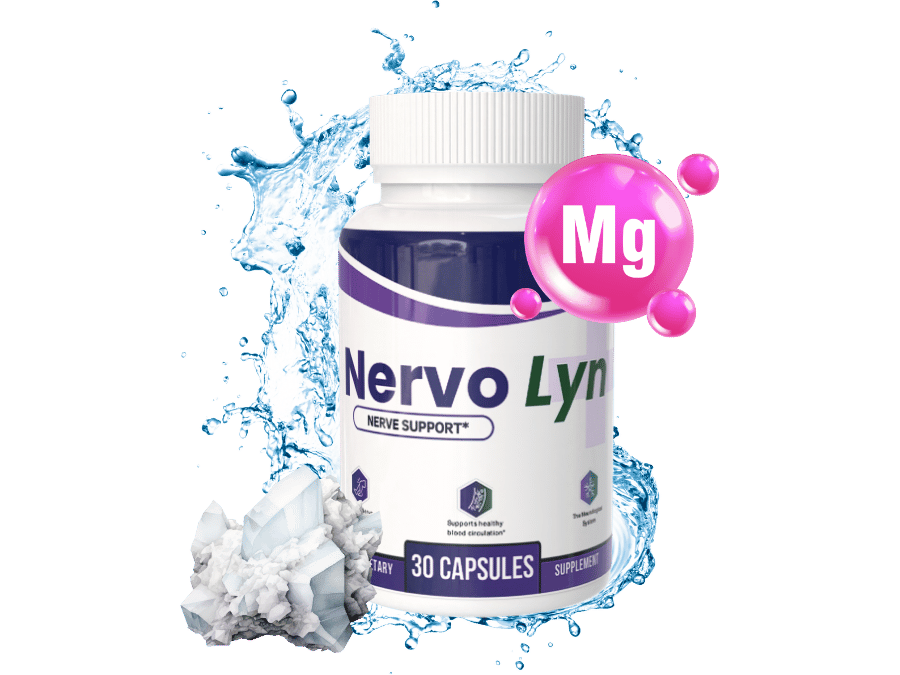
Why did it take that long? Because nothing in it numbs anything. If the coating on a nerve has been wearing thin for years, the body does its patching slowly, the way it heals anything. The company itself says most people notice early changes in comfort somewhere around three to four weeks, with fuller results building over eight to twelve weeks of taking it every day, and that it works best over three to six months. That's the main reason Peggy, after her first bottle, ordered the six-bottle supply. She did not want to stop at week five and spend another year wondering.
If you have your own canvas bag of remedies in a cabinet somewhere, this is the label Peggy read at my kitchen table.
Read the label built for the wire, not the skin →Who this is for, and who it isn't
It may be worth a look if you're over 50, your feet or legs burn, tingle, buzz or go numb, it's worse at night, you've had the basics checked with your doctor, and you've already been through your own round of soaks, rubs and teas that help for an hour and then let you down.
It is not for you if your numbness came on suddenly, is spreading fast, is on one side of your body, comes with real weakness in a leg, or you have a sore on your foot that isn't healing. Those need a doctor this week, not a supplement. It's also not for you if you want to feel different by the weekend; Peggy would tell you that's not how this went. If you're pregnant or nursing, or you take medication for blood sugar, blood pressure, blood thinning or nerve pain, show your doctor the label first, the way she did.
Why she was willing to try one more bottle
After eleven disappointments, the guarantee is what got Peggy to say yes. The company's page shows a 60-day money-back guarantee. It's a one-time order with no subscription and no auto-billing, made in the United States in a GMP-certified facility. Her worst case, she figured, was two months of one capsule at breakfast and a phone call. That was less than she'd risked on the castor oil sheets.
Peggy spent a year and four hundred dollars treating the feeling. The coating kept wearing thin the whole time. Every month you wait is a month the wire doesn't get back.
Start your 60-day try before another year of remedies →Where she is now
Results vary, and hers are hers. Nobody has told Peggy her nerves are "fixed," and she'd roll her eyes at anyone who tried. She still sees her doctor, still checks her feet every night, still brings lemon bars to everything. What changed is that she stopped spending her nights shopping for the next remedy. "I was looking for something to put on my feet," she said. "I should have been looking for something to feed the wire."
P.S. Last Saturday Peggy sat at my kitchen table again, same chair, and the only thing she unpacked was a pan of lemon bars. If your own counter looks the way mine did that morning in March, here is the page she wishes Lorraine had shown her a year and eleven jars sooner.
I'll send you the next one
— Denise
No spam, no daily noise. Just what I actually did, written the way I actually lived it, sent when I write it.
Thanks — you're on the list.
This is a first-person account shared with Health Choice Review and is not medical advice, a diagnosis, or a recommendation of any treatment or product. Nerve symptoms and their causes vary between individuals. Always consult a licensed physician about your own health, and never start, stop or change a treatment based on anything you read here.