Home remedies for burning feet: everything in my sister's drawer, and why none of it reached the nerve
Vinegar soaks, Epsom salt, frozen socks, three kinds of cream and a cold bathroom floor. My sister Bev tried every home remedy for burning feet she could find, and every one of them worked on the wrong end of the problem. Here is what she figured out, and what finally changed her nights.

If you've typed home remedies for burning feet into your phone at three in the morning, you already know the feeling my sister Bev described to me on the phone in August: "Like I walked across a parking lot in July, Denise, except I've been in bed since ten." Bev is 64. She cut hair for thirty-eight years, on her feet from eight to six, and she never once complained about her feet until the year she retired and they finally had time to sit still.
That's when they started to burn. Not every hour. Mostly at night, mostly once the house went quiet, mostly in the soles and the balls of her feet. And Bev, being Bev, did what she always did when something wasn't working at the salon. She went looking for a fix she could make herself.
The drawer
By September Bev had a whole drawer in her bathroom for it. I saw it when I stayed over for Labor Day. It was the most organized drawer I have ever seen, because she used to run a salon, and every bottle had a label in her handwriting.
- The vinegar soak. Apple cider vinegar in a dishpan of cool water, fifteen minutes before bed. "Smells like a salad. Works for about as long as a salad."
- The Epsom salt. Warm soaks, the big bag from the drugstore. Lovely while her feet were in the water.
- The ice socks. A pair of cotton socks she'd wet and keep in a freezer bag, to pull on when it got bad. Her own invention.
- The creams. A menthol rub, a pepper cream that she said "set the fire on top of the fire," and a numbing cream from the pharmacy counter.
- The oils. Peppermint, then lavender, then both.
- The floor. And when none of that was in reach, she'd get up and stand barefoot on the bathroom tile until it warmed up under her.
Here's what I want to say about all of it, because I'd hate for anyone to read this and throw out something that gives them a decent night. Some of those can help. A cool soak can take the edge off. The pepper creams have real research behind them for some people. If something in your own drawer gets you to sleep, keep it.
But Bev noticed the same pattern in every one of them, and she said it better than I can: "Everything in this drawer works on my skin. And my skin is not what's broken."
The two things nobody warned her about
Before I go further, two cautions Bev learned the hard way, and that I wish were printed on every one of those home remedy lists.
First, the ice. When your feet have nerve trouble, they may not tell you the truth about cold. Bev left the frozen socks on for most of an hour one night and woke up with the tops of her toes a blotchy white-red that scared both of us. If your feet burn or go numb, ice straight on the skin is not a harmless home remedy.
Second, the hot water. The same nerves that misreport cold can misreport heat. Feet that are half numb can sit in water that is far too hot and not complain. Bev now tests her soak with her elbow, the way she used to test a baby's bath.
The cord on the blow dryer
The thing that finally made sense of it for Bev came from her own trade. Every hairdresser has had a blow dryer with a frayed cord. You know the spot, a few inches from the handle, where the coating cracks from years of being wrapped and unwrapped. And you know what happens there: that's the spot that gets hot. Not the plug. Not the wall. The place where the coating wore through.
Your nerves are built the same way. Every nerve running down to your feet is a long wire wrapped in a protective coating, called myelin, and it does what the rubber on that dryer cord does. When it's whole, the signal stays inside and travels quietly. When it wears thin, the signal starts to leak. Some of it comes through too loud, and you feel burning and pins and needles. Some comes through too weak, and you feel numbness. The longest wires in your body run to your feet, which is why the feet usually go first.
"So I've been putting ice on the plug," Bev said, the night she worked this out at my kitchen table. "For a year. And the fray is somewhere up the cord."
That's the honest problem with most home remedies for burning feet. Cooling the skin can quiet the alarm for twenty minutes. It doesn't reach the wire, and it doesn't ask the question that actually matters: what is wearing the coating thin in the first place?
The four-dollar recipe, and the question Bev couldn't answer
Bev had one more thing in that drawer that I haven't mentioned, because it wasn't really a remedy so much as a project. She'd seen a turmeric drink making the rounds online, a morning recipe people said cost about four dollars a week, and she'd been making a version of it at night with turmeric from the grocery store, warm milk and black pepper. It turned her mugs yellow and did nothing else she could feel.
That one bothered her more than the others, because turmeric has a real reputation around nerves and inflammation. So why nothing? It was her friend Ruth, from church, who asked the questions that stopped her: Which turmeric? At what time of day? And did she know that the jar on an American grocery shelf isn't necessarily the same thing as what the research looked at?
Bev didn't know. Neither did I. And I'm not going to pretend I can answer all three here, because I'm a retired bookkeeper, not a pharmacist. What I can tell you is that the spice in your cabinet and a turmeric extract measured for its active compounds are not the same thing, and once Bev understood that, she stopped blaming herself for the yellow mugs.
What Ruth had on her kitchen windowsill
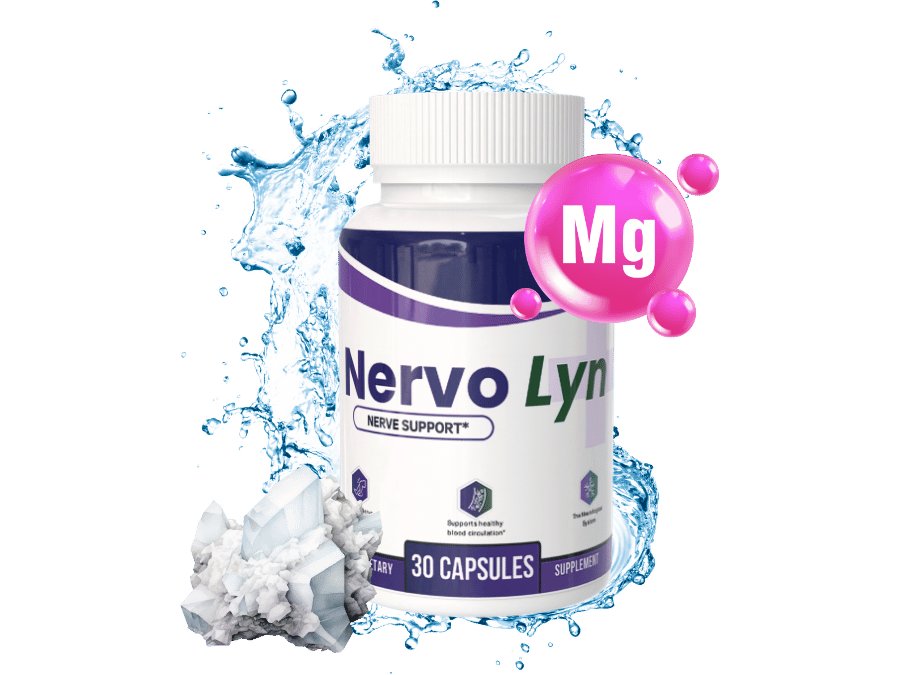
Ruth is 72, and she'd been through her own version of Bev's drawer two winters ago. She wasn't selling anything. She just reached up to the windowsill over her sink, where she keeps her morning things, and handed Bev a bottle. It was called NervoLyn.
Bev did what any woman who spent her career reading the backs of shampoo bottles would do. She turned it over and read the label out loud, right there at Ruth's sink, slowly, like she was looking for the catch.
- Turmeric, standardized to 95% curcuminoids. "So that's the difference. Not the jar. The measured kind." The company includes it for the body's normal inflammation response around stressed nerves.
- Alpha lipoic acid, which the company calls one of the most studied antioxidants for the nerves of the hands and feet, there to help protect nerve tissue from everyday oxidative wear. "That's for the fray."
- Butcher's broom, an old circulation herb, to help keep blood moving all the way down to the feet. "Because the feet are the end of the line."
- L-carnitine and Coenzyme Q10, both about energy inside the cells, the fuel a nerve needs to keep up its own maintenance.
- Magnesium glycinate, 80 mg, a gentle form of magnesium the company ties to calm nerve signaling and better sleep. "Now you're talking."
"It's not something for the skin," Bev said, handing it back. "It's something for the cord." It's one capsule a day, and Ruth takes hers in the morning with breakfast. Bev took a picture of the label, took it to her doctor, who said it wouldn't interfere with anything she was on, and ordered her own that afternoon. What tipped her over was the 60-day money-back guarantee on the company's page. "If my drawer had come with a guarantee," she said, "I'd be a rich woman."
What she noticed, week by week
She takes it at breakfast now, with her coffee, the way Ruth does. Here's how it went, from our phone calls.
- Week 1. Nothing she could point to. She kept the vinegar soak going because she likes the ritual.
- Weeks 2 and 3. One night she realized she hadn't gotten up to stand on the tile. She wasn't sure if it meant anything. Neither was I, and I told her so.
- Month 1. The burning still came, but later in the night and not as hot. She threw out the ice socks herself, which for Bev is a ceremony.
- Months 2 and 3. She's sleeping most nights with her feet under the covers. The burning still visits after a long day, and she's honest that it isn't gone. But the drawer is down to the Epsom salt and one cream, and she's been back on her feet at her granddaughter's softball games.
Why does it take that long? Because nothing in that bottle numbs anything. If the coating on a nerve has been wearing thin for years, the body does its own repair on its own schedule, and the longest wires, the ones to your toes, tend to be the last to quiet down. The company says most people notice early changes around three to four weeks, with fuller results building over eight to twelve weeks of daily use. That's why Bev, who never in her life bought one bottle of anything when she could buy the salon size, went to the bigger supply after her first.
If your own drawer is full and your feet are still on fire, this is the bottle Ruth took down off her windowsill.
See what Ruth handed my sister →Who this is for, and who it isn't
It may be worth a look if you're over 50, the burning started in your soles or toes and tends to flare at night, your doctor has checked the basics, and the soaks, creams and cold floors only buy you twenty minutes.
It is not for you if your feet are red, hot and swollen to the touch, the burning came on suddenly, it's only on one side, it comes with leg weakness, a drooping face or trouble speaking, or you have a sore on your foot that isn't healing. Those need a doctor, not a drawer. If you've never had your blood sugar, B12 and thyroid checked, start there. And if you're pregnant or nursing, or take medicine for blood sugar, blood pressure, blood thinning or nerve pain, show your doctor the label first, the way Bev did.
Why my sister, who trusts nothing, said yes
Bev has spent a year and more money than she'll admit on things that worked on her skin for twenty minutes at a time. NervoLyn's own page promises a full refund within 60 days if you aren't satisfied, it's a one-time order with nothing that renews on its own, and it's made in the United States in a GMP-certified facility. For a woman who learned the hard way that ice on numb feet isn't harmless, one capsule with her coffee and her money back if nothing changed felt like the safest thing in the drawer.
The coating doesn't stop wearing just because the skin feels cool for a while. The sooner the wire gets some attention, the more of it there is to work with.
Try it for 60 days, with your money back if your feet don't notice →Where she is now
Results vary, and Bev's are Bev's. She still sees her doctor, still checks her feet every night, still soaks on Sundays because she likes it. Nobody has told her the burning is gone for good, and she'd be the first to doubt them. But she stopped searching for home remedies for burning feet at three in the morning. "I was fixing the wrong end of the cord," she says.
P.S. Last week Bev called to tell me the bathroom tile is "just a floor again." That was the whole call. If you're the one standing on yours tonight, here's what took its place for her. And if you want the longer story of a friend who tried eleven home remedies before she found the same thing, Peggy's is here.
I'll send you the next one
— Denise
No spam, no daily noise. Just what I actually did, written the way I actually lived it, sent when I write it.
Thanks — you're on the list.
This is a first-person account shared with Health Choice Review and is not medical advice, a diagnosis, or a recommendation of any treatment or product. Nerve symptoms and their causes vary between individuals. Always consult a licensed physician about your own health, and never start, stop or change a treatment based on anything you read here.