Is acupuncture good for neuropathy? My walking friend Phyllis paid for ten sessions to find out, and the needles answered a different question than the one she asked
Phyllis and I walk the same loop around the reservoir every morning at seven, her with her cane, me with my neighbor's dog. In August she told me she had booked ten acupuncture sessions for the burning in her feet, $85 each, none of it covered. "Is acupuncture good for neuropathy, Denise? Because I just bet eight hundred and fifty dollars that it is." Here's what those ten sessions did, what they didn't, and the man in the waiting room who changed what she did next.


Is acupuncture good for neuropathy? Phyllis asked me that on the second bench of the reservoir loop, the one she has started stopping at every morning. She's 68, a retired school librarian, and the burning and pins-and-needles in both feet started about four years ago in her toes. By this summer it had climbed past her ankles. Her doctor calls it peripheral neuropathy. Phyllis calls it "walking on a sunburn."
She had already done the usual list. The nerve pill that made her sleepy. The cream that worked until 2 a.m. Then her daughter-in-law, who swears by acupuncture for her own migraines, found a clinic twenty minutes away and Phyllis booked a package of ten. "I spent forty years telling children to look things up before they believe them," she said. "So I looked it up. And the answer was: maybe."
That "maybe" is honest, by the way. Researchers keep studying it. A small trial on needle therapy for nerve damage after chemotherapy came out in a cancer journal this August, and another trial from Taiwan was only posted to the federal trials registry in July, with its results still not out. When you search the question at midnight, that's what you find: some studies that look encouraging, most of them small, and almost nobody explaining why it helps some people and not others.
Sessions one through four: the hour of quiet
I'll tell it the way Phyllis told it to me on the walks, one session at a time, because she kept notes in the little spiral pad she carries in her coat.
The acupuncturist was kind and careful, and she asked better questions than anyone else Phyllis had seen. Thin needles along the shins, the tops of the feet, between the toes. Then twenty-five minutes under a warm lamp. Phyllis said the first time she almost cried, not from pain, but because for most of that hour her feet were simply quiet.
And that's real. Acupuncture may calm how loudly the nerves are signaling, and it may help blood move through the lower legs for a while. For a lot of people it's a genuinely good hour, and I would never tell anyone to cancel theirs.
Sessions five through eight: the drive home
Here's what Phyllis wrote in her pad after session five: "Quiet in the chair. Burning by the time I parked."
By session eight the pattern was the same every time. The hour helped. The evening was hers. By the next morning on the loop, she was back to stopping at the second bench. She said it felt like paying someone to hold an umbrella over her feet. Wonderful while they held it. And then they had to let go.
She asked the acupuncturist, straight out, whether the needles were fixing anything. And to her credit, the woman told her the truth: she could help the signal settle and the circulation move, but she couldn't promise anything about the nerve itself, and Phyllis should keep working with her doctor on blood sugar, B12 and what she was feeding those nerves.

What the needles were never built to reach
That word stuck with both of us. Feeding. Because it's the part I keep coming back to on this blog.
Picture a nerve in your foot like an old extension cord running from the house to the garden shed. The copper carries the signal. The coating around it keeps the signal clean. When that coating wears thin, and after years of high blood sugar, or just years, it can break down the way rust creeps under paint, the signal starts leaking. That leak is what you feel as burning, buzzing, the cotton-under-the-foot numbness. The longest cords in your body run all the way to your toes, which is why it starts there and why it climbs.
A needle can calm the leak. A cream can quiet it. A pill can muffle it. All of that can make a day easier. But not one of them puts anything back into the coating. That was the hole in Phyllis's plan, and it's the same hole I found in Lorraine's index card and Marlene's foot soaks.
There's a doctor with nearly thirty years in practice who has been talking about this for a while: that the wear on the coating is a slow process, and that what may support it is a simple morning habit built around one spice most people already have in the cupboard. But he's very particular about it. Which kind. How much. What hour of the day. And he says the jar in most American grocery stores is not the same thing at all. Phyllis had been stirring the grocery-store kind into her oatmeal for a year. That explained a lot.
Session nine: the man by the fountain
The answer came from the waiting room, which is where these things usually come from.
Curtis is 74, a retired city bus driver, and he comes to the same clinic for his lower back, not his feet. He and Phyllis had nodded at each other for weeks next to the little tabletop fountain. At session nine she was rubbing her ankle through her sock, and he said, "Feet?" She said yes. He said his were the same for six years, "like driving a route on two hot plates," and that they'd quieted down since spring.
Phyllis, being a librarian, asked for his source. Curtis reached into the inside pocket of his windbreaker and set a bottle on the magazine table, right next to a two-year-old copy of a gardening magazine. "My daughter got sick of hearing me complain," he said. "Read the back."
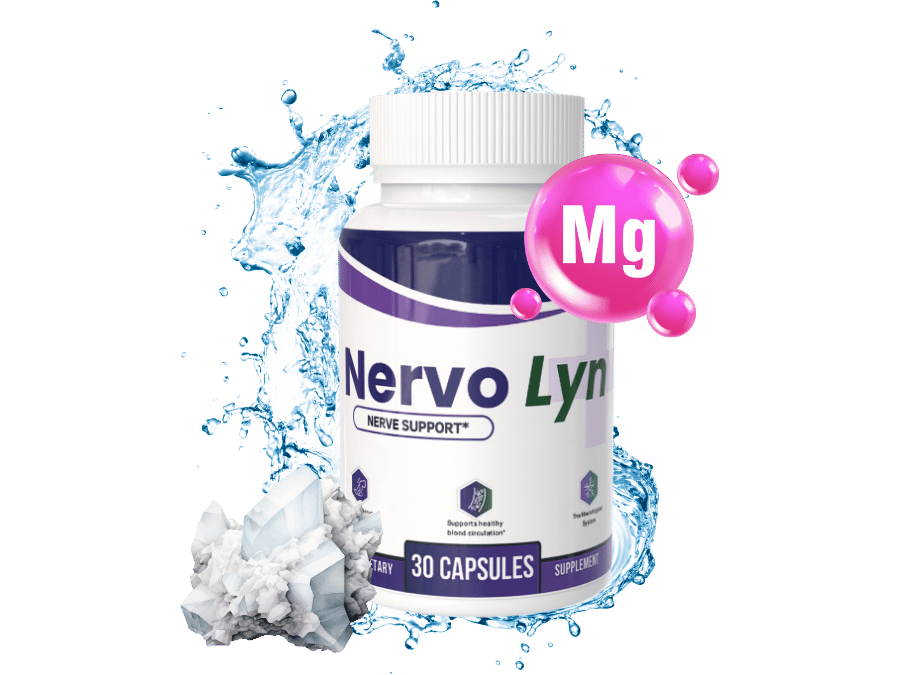
It was NervoLyn. And Phyllis read the back the way she used to read the copyright page of a new book, every word, with her glasses pushed down. Here's what she wrote in her pad:
- Alpha lipoic acid. The company calls it one of the most studied antioxidants for the nerves in the hands and feet, there to help protect nerve tissue from everyday wear. "That's the one for the rust," she wrote.
- Turmeric extract, standardized to 95% curcuminoids. For the body's normal inflammation response around stressed nerves. Next to it she wrote: "NOT the oatmeal kind."
- Butcher's broom. An old herb for circulation, to keep blood moving all the way down to the toes, which is the same thing she was paying the warm lamp to do for an hour.
- L-carnitine and Coenzyme Q10. Fuel for the cells, the energy a nerve needs for its own slow repair work.
- Magnesium glycinate, 80 mg. A gentle form of magnesium the company ties to calmer nerve signals and better sleep.
"So the needles hold the umbrella," she said to me the next morning on the loop, "and this is supposed to fix the roof." She took the label to her doctor, who said nothing in it should clash with her blood pressure medicine, told her to keep checking the soles of her feet every night, and said if she enjoyed the acupuncture she could keep going. It's one capsule a day. She ordered from the clinic parking lot before session ten.
What Phyllis noticed, written in the pad
- Week 1. Nothing worth writing down, and she writes everything down. She finished session ten and didn't rebook.
- Weeks 2 and 3. A new prickle in the balls of her feet that made her nervous. Curtis told her he'd had the same thing. Some people notice feeling come back into a numb spot as tingling before it settles, though nobody can promise you that's what it is.
- Month 1. She walked past the second bench. She wrote the date and underlined it twice.
- Months 2 and 3. This is where she is now. The cream sits in the nightstand most nights unopened, and last week she did the full loop twice because I wanted to and she didn't argue.
Why so slow? Because nothing in the bottle numbs anything. If the coating has been wearing thin for years, the body repairs it on its own calendar, and the cord to the toes is the longest one. The company says most people notice early changes in three to four weeks and fuller results over eight to twelve weeks of daily use. That's why Phyllis, who did the math on ten sessions before she booked them, did the same math here and went to the larger supply after her first bottle.
If you've been paying for an hour of quiet that's gone by the time you park, this is the bottle Curtis set on the magazine table.
See what Phyllis read on the back of Curtis's bottle →Who it's for, and who it isn't
It may be worth a look if you're over 50, the burning, tingling or numbness started in your toes and has crept upward, your doctor has checked the basics, and everything you've tried so far, needles included, quiets your feet for a few hours and then lets go.
It is not for you if the numbness came on suddenly or on one side, comes with leg weakness, a drooping face or trouble speaking, or you have a sore on your foot that isn't healing. Those need a doctor today, not a blog. If nobody has ever checked your blood sugar, B12 and thyroid, start there. And if you're pregnant or nursing, or you take medicine for blood sugar, blood pressure, blood thinning or nerve pain, show your doctor the label before you begin.
Why a librarian who checks every source said yes
For Phyllis, it came down to the numbers she could see. Ten acupuncture sessions had cost her $850 and bought her ten good hours. The company gives you 60 days to find out, with your money back if your feet don't notice. It's a single order, nothing that renews on its own, made in the United States in a GMP-certified facility. "Sixty days," she said, "is sixty walks around this reservoir. My feet will be the judge. They always are."
Every month the coating keeps thinning, the burning climbs a little higher up the leg. Phyllis's only regret is the summer she spent paying to hold the umbrella instead of fixing the roof.
Start your 60 days before the burning climbs another inch →So, is acupuncture good for neuropathy?
Here's my honest answer, as a retired bookkeeper and not a doctor. It can be good for the hour you're in the chair, and for some people longer than that, and the research is still coming in. If you love your acupuncturist, keep going. But acupuncture works on the signal. If the coating on the nerve is what's wearing out, you need something aimed at the coating too, because no amount of quiet in a warm room puts it back. Results vary from person to person, and Phyllis's are her own. She still sees her doctor, still checks her soles every night, and still keeps the cream in the nightstand for the bad ones.
P.S. This morning Phyllis walked right past the second bench without even looking at it, and I had to jog to keep up with her and the dog. If you're the one sitting on that bench in your own town, here's what Curtis pulled out of his windbreaker. And if your list also has a cream, a pill and a buzzing machine on it, my choir friend Lorraine's story about her index card goes right alongside this one.
I'll send you the next one
— Denise
No spam, no daily noise. Just what I actually did, written the way I actually lived it, sent when I write it.
Thanks — you're on the list.
This is a first-person account shared with Health Choice Review and is not medical advice, a diagnosis, or a recommendation of any treatment or product. Nerve symptoms and their causes vary between individuals. Always consult a licensed physician about your own health, and never start, stop or change a treatment based on anything you read here.