What is the best thing to use for neuropathy? My choir friend Lorraine tried the cream, the pill and the machine before she asked the question that finally mattered
Lorraine stands next to me in the alto section at church, and for two years she has sung every Sunday hymn shifting her weight from one foot to the other like the floor was hot. In September she handed me a list on an index card: everything she had bought for her feet. Then she asked me, "Denise, what is the best thing to use for neuropathy? Not the cheapest. The best." Here's what we found when we went down her card one line at a time.


What is the best thing to use for neuropathy? Lorraine asked me that in the church parking lot in September, holding an index card covered in her small, neat handwriting. She's 66, a retired court stenographer, and she has had burning and pins-and-needles in both feet for about three years. Her doctor calls it peripheral neuropathy. She calls it "the floor is lava," because that's what Sunday mornings feel like standing in the choir loft for an hour.
The card was her receipt history. Everything she had bought, tried or been prescribed for her feet, with a little check mark or an X next to each one. Lorraine was a stenographer for thirty-one years. She writes everything down. And when she handed it to me, she said the thing that stuck with me all week: "I don't want the cheapest. I want the best. I just don't know what the best is anymore."
If you've typed that same question into your phone at midnight, you've probably gotten the same thing she did: a long list of options, each one with a few good reviews and a few people saying it did nothing. So we did it her way. One line at a time.
Line one: the lidocaine cream
Lorraine's first check mark. A numbing cream from the pharmacy, rubbed on the tops of her feet before bed. It works the way a dentist's shot works, by quieting the nerve endings in the skin for a few hours. For a lot of people it's a real help at bedtime, and I'd never tell anyone to throw theirs away.
But notice what it does. It turns down the alarm. It doesn't do anything about why the alarm is ringing. By 3 a.m., when the cream wore off, the burning was right where she left it.
Line two: the prescription nerve pill
Her doctor started her on one of the common nerve-pain medicines. It took the edge off. It also made her so foggy that she lost her place in a hymn she has sung since 1972, and she gained eight pounds in four months. She takes it at a lower dose now, with her doctor's blessing, and that's a decision between the two of them. If you're on one, please don't stop it on your own.
Here's what she wrote next to it on the card, in tiny letters: "Quiets the noise. Doesn't fix the wiring."
Line three: the machine that buzzes
A TENS unit, the little box with sticky pads that sends a tingle through your skin. Her grandson ordered it for her birthday. Lorraine liked it, honestly. Twenty minutes in the recliner with it buzzing felt like a distraction she could hold. When she took the pads off, the burning came back on its own schedule.

The question none of the lines answered
Lorraine and I sat at my kitchen table with the card between us, and she said it before I did. "Every one of these is aimed at the pain. Not one of them is aimed at the nerve."
That's the question I've been circling on this blog for months. Picture a nerve in your foot like an old lamp cord. The copper wire inside carries the signal, and the coating around it keeps that signal clean. When the coating thins, and after years of high blood sugar or just years, it can wear down like rust working through paint, the signal starts leaking and misfiring. That leak is what you feel as burning, buzzing, pins and needles, or the strange cotton-under-the-foot numbness.
Cream, pills and buzzing pads all work on the leak. They turn down how loudly you feel it. None of them was ever built to help the coating itself. And the longest nerves in your body, the ones that run all the way to your toes, are the first to feel it and the last to get help.
When Lorraine asked her doctor about it at her October visit, he didn't laugh. He said it was the right question, that the nerve needs its own support, and that blood sugar control, movement and certain nutrients all play a part. He also said the grocery-store turmeric and the vitamin-aisle B12 she'd been taking were "not nothing, but not the same as a real dose." Which, I will tell you, is the same thing I've heard from three different women this year: it isn't only what you take, it's which kind, how much, and when.
The bottle from the woman in the second row
The answer came from the second row of the choir, which is where these things usually come from. A soprano named Gail, 71, who has had neuropathy longer than Lorraine, overheard her talking about the index card at coffee hour. Gail used to sit down for the last verse of every hymn. Lorraine had noticed she'd stopped doing that sometime in the summer.
Gail didn't say much. She opened her pocketbook, the big one she carries to church, and set a bottle on the coffee-hour table between the creamer and the sugar cubes. "Put that on your card," she said. "And put it at the top."
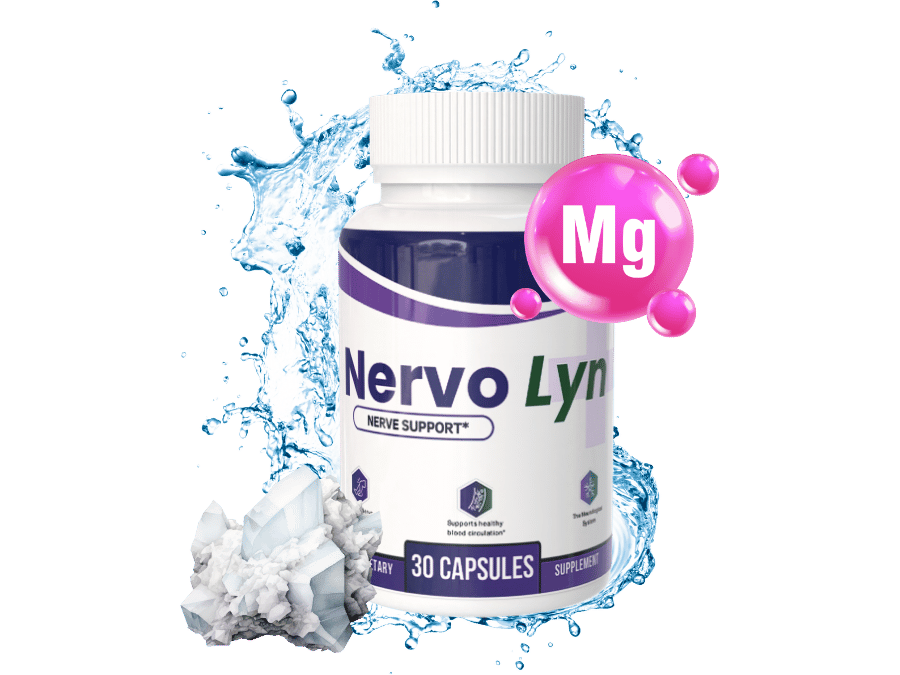
It was NervoLyn. Lorraine's first reaction was the stenographer's reaction. She picked it up, turned it around, and read the back out loud, word for word, the way she used to read testimony back to a judge. Here's what she underlined later on her card:
- Alpha lipoic acid. The company calls it one of the most studied antioxidants for the nerves in the hands and feet, there to help protect nerve tissue from everyday wear. "So that's the one that goes after the rust," she said.
- Turmeric extract, standardized to 95% curcuminoids. For the body's normal inflammation response around stressed nerves. "Not the spice-aisle jar, then. That's what the doctor meant."
- Butcher's broom. An old herb for circulation, to keep blood moving all the way to the toes, where the longest nerves live.
- L-carnitine and Coenzyme Q10. Fuel for the cells, the energy a nerve needs for its own slow repair work.
- Magnesium glycinate, 80 mg. A gentle form of magnesium the company ties to calmer nerve signals and better sleep.
It was the first thing on her card that was aimed at the wire instead of the noise. She took the label to her doctor. He looked it over, said nothing in it should clash with her blood pressure pill or her lower-dose nerve medicine, told her to keep checking the soles of her feet every night, and to keep the cream for bad evenings. It's one capsule a day. She ordered from her phone in the doctor's parking lot.
What Lorraine noticed, one stretch at a time
- Week 1. Nothing she'd write down, and Lorraine writes everything down. She kept the cream for bedtime, as her doctor said.
- Weeks 2 and 3. A new prickling in the balls of her feet that worried her. Gail told her she'd had the same. Some people notice feeling come back into a numb spot as tingling before it settles, though nobody can promise you that's what it is.
- Month 1. She sang the whole last verse of "How Great Thou Art" without shifting her weight. She wrote the date on the card.
- Months 2 and 3. She used the cream three times in October instead of every night. Her grandson asked if she still wanted the TENS unit. She gave it to her brother.
Why so slow? Because nothing in it numbs anything. If the coating has been wearing thin for years, the body repairs it on its own schedule, and the nerves to the toes are the longest road. The company says most people notice early changes in three to four weeks and fuller results over eight to twelve weeks of daily use. That's why Lorraine, who never buys anything she hasn't read twice, went to the larger supply after her first bottle.
If your own index card is full of creams and pills that work for an evening, this is the bottle Gail set down between the creamer and the sugar cubes.
See what Lorraine put at the top of her card →Who it's for, and who it isn't
It may be worth a look if you're over 50, the burning, tingling or numbness started in your toes and has crept upward, your doctor has checked the basics, and everything you've tried so far quiets the pain for a few hours and then quits.
It is not for you if the numbness came on suddenly or on one side, comes with leg weakness, a drooping face or trouble speaking, or you have a sore on your foot that isn't healing. Those need a doctor today, not a blog. If nobody has ever checked your blood sugar, B12 and thyroid, start there. And if you're pregnant or nursing, or you take medicine for blood sugar, blood pressure, blood thinning or nerve pain, show your doctor the label before you begin.
Why a woman who reads everything twice said yes
For Lorraine, it came down to the fine print, which is where she lives. The company gives you 60 days to find out, with your money back if your feet don't notice. It's a single order, nothing that renews on its own, made in the United States in a GMP-certified facility. She added up her index card: the creams, the patches, the machine, the copays. "Sixty days," she said, "is eight Sundays in the choir loft. My feet will tell me."
Every season the coating keeps thinning is a season the longest nerves get harder to reach. Lorraine's only regret is the two years she spent treating the noise.
Start your 60 days before another Sunday on hot floors →So, what is the best thing to use for neuropathy?
Here's my honest answer, as a retired bookkeeper and not a doctor. The best thing is whatever your doctor finds is causing it, treated properly. After that, creams, nerve medicines and TENS units can each make an evening easier, and there's no shame in using them. But if everything on your list is aimed at the pain, add one line aimed at the nerve itself. That's the line Lorraine was missing. Results vary from person to person, and hers are her own. She still sees her doctor, still checks her soles every night, and still keeps the cream in the nightstand for the bad ones.
P.S. Last Sunday Lorraine stood for the whole service, all four hymns, and didn't take her shoes off on the porch afterward. If you're the one reading this with your feet on a cold tile tonight, here's what Gail pulled out of her pocketbook. And if honey is on your card too, my neighbor Bev's story about a spoonful every night for two months goes right alongside this one.
I'll send you the next one
— Denise
No spam, no daily noise. Just what I actually did, written the way I actually lived it, sent when I write it.
Thanks — you're on the list.
This is a first-person account shared with Health Choice Review and is not medical advice, a diagnosis, or a recommendation of any treatment or product. Nerve symptoms and their causes vary between individuals. Always consult a licensed physician about your own health, and never start, stop or change a treatment based on anything you read here.