Is honey good for neuropathy pain? My neighbor Bev took a spoonful every night for two months, and here's what it soothed and what it quietly made worse
My neighbor Bev has a spoon in her nightstand drawer. For two months it sat next to a jar of honey, because a video on her phone said a spoonful at bedtime could calm the burning in her feet. She asked me to look into it with her. Is honey good for neuropathy pain? Here's the honest answer we found, the part that surprised us both, and the question the honey never answered.


Is honey good for neuropathy pain? My neighbor Bev asked me that over the fence in August, holding a jar of raw clover honey from the farmers market like it was evidence. She's 68, a retired school cafeteria manager, and she has had type 2 diabetes for eleven years. For the last three, her feet have burned at night. Not all night. Just from the moment she lies down until somewhere around 3 a.m., when she gives up and sits on the porch.
A woman in one of her Facebook groups had posted a video. A spoonful of honey before bed, it said, "feeds the nerves while you sleep." Hundreds of comments. Some people swore by manuka, the expensive kind from New Zealand with numbers on the label. Some said local raw honey was better because "the bees know your area." Bev had already bought both.
Bev is not a gullible woman. She ran a kitchen that fed four hundred children a day on a budget you wouldn't believe. But when your feet have kept you up for three years, a sweet spoonful at bedtime doesn't sound like a scam. It sounds like mercy. So she tried it, and she asked me to keep her honest.
What two months of honey actually did
Bev kept a little calendar on her refrigerator, the kind the bank gives out. Each morning she wrote two things: what she took the night before, and how many times she was up with her feet.
- Week 1, raw clover honey. She liked it. She said the ritual itself, the warm tea and the spoon, helped her wind down. Up twice most nights, same as before.
- Weeks 2 to 4, manuka honey. Thirty-eight dollars a jar. "It tastes like medicine, so I figured it was working." Some nights a little calmer, some nights worse. No pattern she could point to.
- Weeks 5 to 8, two spoonfuls instead of one. Because if one helps a little, two should help more. This is where things went sideways.
Her morning sugar readings started creeping up. Not dramatically, ten here, fifteen there. Then in October her doctor's office called with her A1c. It had gone from 7.1 to 7.6. Her doctor asked her, kindly, what had changed. Bev looked at the calendar on her fridge and saw a column of little spoons.
What the research really says about honey and nerve pain
I'm a retired bookkeeper, so I did what bookkeepers do: I went looking for the receipts. Here's the fair version.
Honey has real antioxidant and anti-inflammatory compounds in it, and that's why people hope it might help a stressed nerve. There's a small trial, under fifty people with type 2 diabetes, where a few months of oral honey went along with lower self-reported nerve symptom scores. There's also some animal research. That's about it. A review published this past July looked specifically for good, controlled trials comparing honey to standard care for diabetic nerve pain, and couldn't find a single one. Reviews of manuka in particular have said the same thing this year: interesting, not proven.
So honey isn't snake oil. It may soothe you. It may even help a little with the inflammation side of things. But here's the part none of those videos mention, and it's the part Bev's A1c found out the hard way:
Honey is sugar. A tablespoon is about seventeen grams of it. For a person whose neuropathy came from years of high blood sugar, a nightly spoonful is pouring a little more of the original problem onto the fire. It can feel good and quietly make the long-term picture worse at the same time. If you have diabetes, please talk to your doctor before you make honey a nightly habit, and count it like the carbohydrate it is.
The question the honey never answered
When Bev and I sat with her calendar, the pattern was the same one I've seen in every notebook a reader has shown me. The spoonful changed how her evening felt. It never changed where her feet were headed. The burning had crept from her toes to the arch of her foot over three years, honey or no honey.
Here's the picture that finally made sense to her. The nerves that run to your feet are the longest ones in your body, and each one is wrapped in a protective coating, like the plastic around an electrical cord. While that coating is whole, the signal travels clean. When it thins, the signal leaks. A little leak and you feel numb. A bigger leak and you feel burning, zapping, that sunburn-on-the-inside feeling Bev describes. The longest cords lose the most coating, which is why it starts in the toes and climbs.
A spoonful of honey goes to your stomach. That coating lives deep in your leg and foot, wrapped around the nerve itself. Whatever is wearing it down doesn't care what you ate for dessert.
The person who put a name to "whatever is wearing it down" for Bev was a doctor in a short video presentation her daughter sent her. As Bev told it to me, he's spent close to thirty years with neuropathy patients, and he believes there's a slow process going on around the nerve, eating at that coating the way rust eats an old fence and leaving a sticky kind of residue behind. He talks about a cheap morning recipe made from things already in most kitchens, and he's very particular about one ingredient: which kind you buy, because the common store version isn't the same, and what hour of the day you take it. Bev wouldn't tell me the hour. "He says it better than I would," she said. "And I wrote it on the calendar, so now you'd have to come over."
That's one doctor's view, and I'll let him explain it. What it did for Bev was change the question. She stopped asking, "What can I eat to calm my feet tonight?" and started asking, "What is eating the coating, and what can I do about that every day?"
The bottle that replaced the spoon
Bev's sister Joyce lives in Knoxville and has had neuropathy longer than Bev has. When Bev mentioned the honey on the phone, Joyce laughed out loud. "I did the honey in 2023," she said. "And the vinegar, and the turmeric from the grocery store. I'm mailing you something."
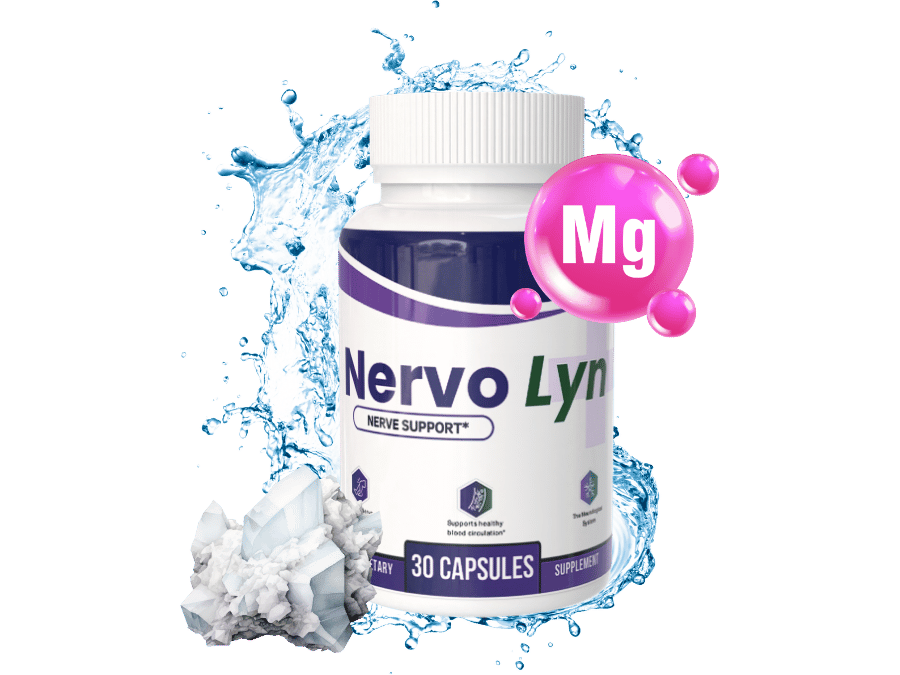
The box came four days later. Inside was a bottle of NervoLyn and a sticky note in Joyce's handwriting: "Nothing sweet in this one. Read the back before you call me."
Bev read it at my kitchen table with her reading glasses on top of her regular glasses, which is how she reads anything she doesn't trust. Here's what she circled:
- Alpha lipoic acid. The company calls it one of the most studied antioxidants for the nerves in the hands and feet, there to help protect nerve tissue from everyday wear. "So this is what I wanted the honey to be," Bev said.
- Turmeric extract, standardized to 95% curcuminoids. For the body's normal inflammation response around stressed nerves. She tapped the label. "Not the jar from the spice aisle, then." That's all either of us will say about turmeric.
- Butcher's broom. An old herb for circulation, to keep blood moving all the way to the toes.
- L-carnitine and Coenzyme Q10. Fuel for the cells, the energy a nerve needs for its own slow repair work.
- Magnesium glycinate, 80 mg. A gentle form of magnesium the company ties to calmer nerve signals and better sleep.
No sugar on the label. That mattered to her. She called Joyce, who told her she'd been taking it since spring and could finally feel the rug under her bare feet again. Then Bev took the label to her doctor, the same one who'd asked about her A1c. He said it wouldn't interfere with her metformin or her blood pressure pill, told her to keep checking her feet, and to keep the honey to the weekends. She ordered that afternoon. It's one capsule a day.
What Bev noticed, one stretch at a time
- Week 1. Nothing. She kept the tea at bedtime, without the honey, because the ritual still helped her settle.
- Weeks 2 and 3. A new pins-and-needles feeling in her arches, and she almost quit. Joyce said she'd had the same and it passed. Some people notice tingling return to a numb spot before more normal feeling comes back, though nobody can promise you that's what it is.
- Month 1. Three nights in one week she slept until her alarm. She drew a star on the bank calendar next to each one.
- Months 2 and 3. Her next A1c came back at 7.2, which her doctor credited to dropping the honey and walking more, and Bev doesn't argue. And she sat on the porch at 2 a.m. only twice in the whole month.
Why so slow? Because nothing in it numbs or masks anything. If the coating has been thinning for years, the body rebuilds it on its own schedule, and the longest nerves get their signal back last. The company says most people notice early changes in three to four weeks and fuller results over eight to twelve weeks of daily use. That's why Bev, who never buys anything in bulk unless it's paper towels, went to the larger supply after her first bottle.
If your nightstand has a spoon in it and your feet still have you on the porch at 2 a.m., this is the bottle Joyce mailed from Knoxville.
See what replaced Bev's bedtime spoon →Who it's for, and who it isn't
It may be worth a look if you're over 50, the burning, tingling or numbness started in your toes and has been creeping upward, your doctor has checked the basics, and everything you've tried so far, sweet or sour, has only helped for an evening.
It is not for you if the numbness came on suddenly or on one side, comes with leg weakness, a drooping face or trouble speaking, or you have a sore on your foot that isn't healing. Those need a doctor today, not a blog. If nobody has ever checked your blood sugar, B12 and thyroid, start there. And if you're pregnant or nursing, or you take medicine for blood sugar, blood pressure, blood thinning or nerve pain, show your doctor the label before you begin.
Why a careful woman said yes
For Bev, it was cafeteria math. The company gives you 60 days to find out, with your money back if your feet don't notice. It's a single order, nothing that renews on its own, made in the United States in a GMP-certified facility. She'd spent close to ninety dollars on manuka alone, plus the creams, plus the patches. "Sixty days is two refrigerator calendars," she said. "I'll know by the stars."
Every season the coating keeps thinning is a season the longest nerves get harder to reach. Bev's one regret is the summer she spent sweetening the problem.
Start your 60 days before another summer on the porch →So, is honey good for neuropathy pain?
Here's my honest answer. A little honey in warm tea may help you relax at bedtime, and that's not nothing. The research on honey for nerve pain is early and small, and there's no solid trial showing it treats neuropathy. If your neuropathy comes from diabetes, a nightly spoonful can push your numbers the wrong way, so count it and ask your doctor. And no spoon reaches the coating around a nerve in your foot. Results vary from person to person, and Bev's are her own. She still sees her doctor and still checks her soles every night. The honey jar is in the pantry now, behind the flour, for Sunday biscuits.
P.S. Bev's porch light was off at 2 a.m. last night. I know because I was up myself, and I looked. If you're the one reaching for the spoon in the dark tonight, here's what her sister mailed her instead. And if you've been soaking your feet every night too, my friend Marlene's story about seven foot soaks in one winter is the other half of this one.
I'll send you the next one
— Denise
No spam, no daily noise. Just what I actually did, written the way I actually lived it, sent when I write it.
Thanks — you're on the list.
This is a first-person account shared with Health Choice Review and is not medical advice, a diagnosis, or a recommendation of any treatment or product. Nerve symptoms and their causes vary between individuals. Always consult a licensed physician about your own health, and never start, stop or change a treatment based on anything you read here.