Magnesium for neuropathy? My sister June took it every night since August. Her feet still buzz like a refrigerator.
June is 68 and taught third grade in Toledo for thirty-one years. Magnesium helped her leg cramps. It didn't touch the numbness or the nine-thirty burn. Here's what magnesium can and can't do, and what her friend from water aerobics brought out of the kitchen.


My sister June is sixty-eight and taught third grade in Toledo for thirty-one years. She is the kind of person who reads the whole pamphlet. So when a woman in her water aerobics class said magnesium had "fixed" her husband's feet, June went home that same afternoon and typed magnesium for neuropathy into her phone, read eleven articles, and bought a bottle of magnesium citrate at the grocery store before supper.
That was August. By the end of October she had the bottle half empty, a calendar where she checked off every night she took it, and the same feet. Numb in the toes, a cold buzzing in the balls of her feet, and a burning that showed up around nine-thirty every night like it had an appointment.
"Denise," she said on the phone, "I did the homework. I'm getting an A in magnesium. Why am I still getting an F in feet?"
Magnesium for neuropathy: what it can and can't do
Magnesium is a real nutrient with a real job in the nervous system. It helps nerve cells settle down after they fire, it's involved in muscle relaxation, and low magnesium is more common than people think after 60, especially in people with diabetes, people on certain water pills or acid-reflux medicines, and people who don't eat many greens, beans and nuts. If you're low, getting back to normal can make a difference in leg cramps, restless nights and that jumpy, wired feeling.
If you're thinking about it, here's the sensible way to go about it:
- Ask your doctor to check your level, along with B12, thyroid and your A1c. Those are the usual suspects behind numb, tingling feet.
- The form matters. Magnesium oxide is cheap but poorly absorbed. Citrate can loosen the stomach. Glycinate is the gentle form many people tolerate best at night.
- More is not better. Too much causes diarrhea, and people with kidney problems need their doctor's okay before taking any.
- Food counts. Spinach, pumpkin seeds, almonds, black beans and oatmeal are all good sources, and pumpkin seeds are in every store this week.
- Separate it from some medicines. Magnesium can interfere with certain antibiotics, thyroid pills and osteoporosis drugs if taken at the same time.
See a doctor quickly if the numbness is spreading fast, is only on one side, or comes with weakness, a sore that won't heal, or trouble with balance.
June did it right. It helped, but…
To be fair to the magnesium, June's leg cramps got better. She used to wake up at two in the morning with her calf in a knot, and that mostly stopped by September. She told me she slept a little deeper too.
But the feet didn't move. The buzzing, the cardboard soles, the nine-thirty burning. "So it's doing something," she said. "Just not the thing I bought it for."
That's the part the eleven articles left out. Magnesium can help quiet a nerve that's misfiring. It can't, by itself, put back what's been worn away around that nerve, or feed the far end of a nerve that's been going hungry for years.
Why one mineral usually isn't enough
The nerves that run to your toes are the longest in your body, and each one is wrapped in a thin protective coating, like the plastic insulation on a lamp cord. When that coating wears thin, the signal starts leaking. Some of it comes out as buzzing and burning. Some of it never arrives, and that's the numbness.
What wears it down, the way it was explained to June, is two slow things working together: a quiet, low-grade inflammation around nerves that are already stressed, and poor blood flow to the very end of the line, where the feet get served last. And when the weather turns cold, the little vessels in your feet tighten up, so nerves that were already short on supplies get even less. That's why so many people say their feet got worse the week the furnace came on.
Magnesium touches the first part a little. It doesn't do much for the second. And there's a kitchen spice that keeps showing up in the research on that first part, but the plain jar in your cupboard isn't the version that was studied, and your body barely absorbs it unless it's taken with something else. Which spice, what it has to be paired with, and why the time of day matters, nobody at June's grocery store mentioned. I hadn't heard it either.

The woman from the pool
The friend from water aerobics is named Rosalind, seventy-one, a retired bank teller. June went over to her house with a pumpkin bread and a question: "Your husband's feet. Was it really just the magnesium?"
Rosalind laughed. "Honey, Walt took magnesium for a year. It helped his cramps and that's it. I should've told you the whole story." Walt's feet changed, she said, when he started on something that had the magnesium in it, but also the spice in the form that's actually absorbed, and something for the circulation, all in one capsule. She went to the kitchen and came back with the bottle.
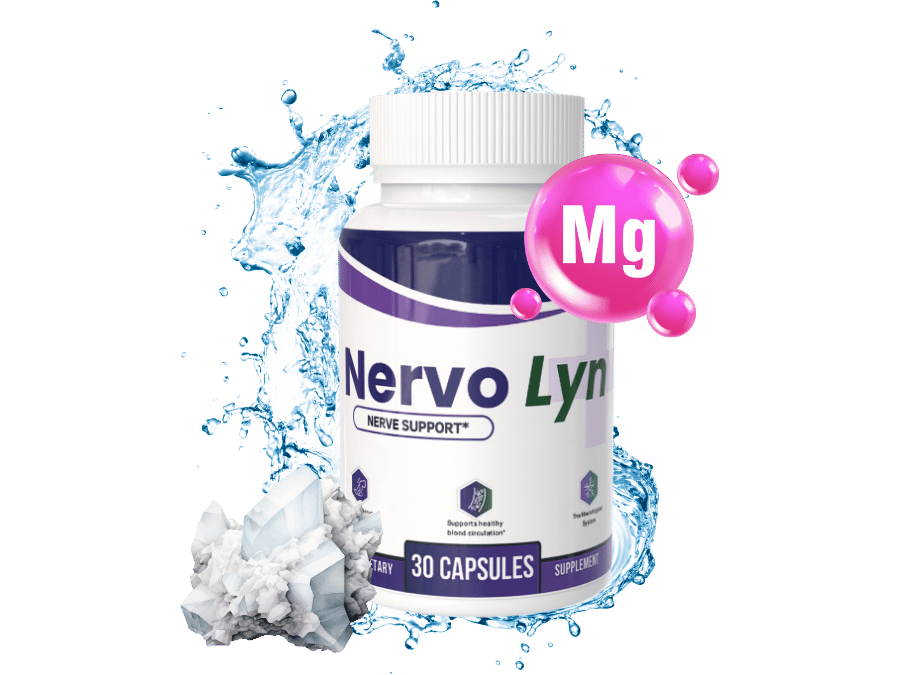
It was NervoLyn. June taught eight-year-olds to read the instructions twice before starting a worksheet, so she sat at Rosalind's table and read the label twice:
- Magnesium glycinate. "Well, there's my A," she said. The gentle form, the one the company connects with calmer nerve signals and better sleep.
- Turmeric extract, standardized to 95% curcuminoids. For the body's normal inflammation response around stressed nerves. Not the grocery-store jar. Rosalind didn't say anything more about it.
- Butcher's broom. A traditional herb for circulation, to help blood make the long trip down to the toes, which is what the cold had been winning against.
- Alpha lipoic acid. An antioxidant the company describes as one of the most studied for the nerves of the hands and feet.
- L-carnitine and Coenzyme Q10. Fuel for the cells, so a tired nerve has the energy for its own slow repair.
"So it's the magnesium plus the other half of the problem," June said. She did it the careful way. She stopped the grocery-store magnesium so she wouldn't double up, took the label to her doctor, who checked it against her blood pressure pill and her thyroid medicine (taken at a different time of day), and told her to take it with breakfast and keep checking her feet every night.
What June noticed, and when
- Week 1. Nothing she'd write on the calendar. Same buzzing, same nine-thirty burn.
- Weeks 2 and 3. A pins-and-needles flicker in her left foot during water aerobics. Rosalind said Walt had felt that too. Some people notice a nerve stirring before it settles, though nobody can promise what it means for anyone else.
- Month 1. The nine-thirty burn started showing up late, and some nights not at all. She stopped keeping the heating pad by the bed.
- Months 2 and 3. Where Walt is now: he walks the dog on the gravel road and can tell when a stone is under his shoe. June has a January appointment on the calendar and plans to tell her doctor everything.
Why so slow? Because nothing in that bottle numbs anything. A coating that wore thin over years gets rebuilt on the body's own schedule, and the longest nerves get their turn last. The company says many people notice early changes in three to four weeks and fuller results over eight to twelve. June ordered the three-month supply. "I gave the magnesium three months," she said. "It's only fair."
If you've been taking magnesium faithfully and your feet are still buzzing when the house goes quiet, this is the bottle Rosalind brought out of the kitchen.
See the label June read twice →Who it's for, and who it isn't
It may be worth a look if you're over 50, the numbness, tingling or burning is in both feet, your doctor has checked the basics (blood sugar, B12, thyroid, magnesium), and the things you've tried help around the edges without ever reaching the feeling itself.
It is not for you if the symptoms came on suddenly or only on one side, if a foot or leg feels weak, or if you have a sore that isn't healing. Those need a doctor first. If you have kidney problems, take medicine for blood sugar, blood pressure, blood thinning, thyroid or nerve pain, or are pregnant or nursing, show your doctor the label before you start, and never stop a prescription on your own. And since it already contains magnesium, ask before stacking it with another magnesium supplement.
The company gives you 60 days, with your money back if your feet don't notice. It's a one-time order, nothing that renews behind your back, made in the United States in a GMP-certified facility. "Sixty days," June said. "That's a whole grading period."
Every cold night the coating stays thin is another night of buzzing feet under the blanket. June wishes she'd asked Rosalind for the whole story back in August.
Give your feet the other half this winter →So, does magnesium help neuropathy?
It can help some people, especially if they're low, and especially with cramps, sleep and that wired, jumpy feeling. Get your level checked, choose a gentle form like glycinate, and don't overdo it. But magnesium alone rarely reaches the two things that keep the feet numb: the worn coating and the poor blood flow at the end of the line. Talk to your doctor about the cause. Results with any supplement vary from person to person, and June's are her own. She still sees her doctor, and she still eats her pumpkin seeds.
P.S. June's old magnesium bottle is in the bathroom cabinet now, behind the cotton balls. She says the calendar on the fridge has a new row of check marks, and last week she wrote "feet quiet" next to three of them. If you're the one keeping the faithful calendar and still lying awake with buzzing feet, here's what Rosalind brought out of the kitchen. And if your feet get worse the moment the weather turns, read what happened to my friend Gloria when it got cold.
I'll send you the next one
— Denise
No spam, no daily noise. Just what I actually did, written the way I actually lived it, sent when I write it.
Thanks — you're on the list.
This is a first-person account shared with Health Choice Review and is not medical advice, a diagnosis, or a recommendation of any treatment or product. Nerve symptoms and their causes vary between individuals. Always consult a licensed physician about your own health, and never start, stop or change a treatment based on anything you read here.