Neuropathy worse after sitting? My neighbor dreads the four-hour Thanksgiving drive. Her sister stopped needing the halfway stop.
Carol is 67 and taught third grade for thirty-four years. By the second hour in the car her feet buzz, and by the driveway they burn all night. Here's why neuropathy flares after a long sit, what helps on the road, and what her sister set down next to the pie.


My neighbor Carol is sixty-seven and taught third grade in Cedar Rapids for thirty-four years. She can sit still for exactly as long as a spelling test takes, and not one minute more. Every Thanksgiving she drives four hours to her son's house outside Omaha. And for the last two Thanksgivings, she told me, the drive has been the worst part of the holiday.
"It's not my back. It's my feet," she said, standing in my kitchen with her keys already in her hand. "By the second hour they're buzzing. By the time I pull into his driveway they burn so bad I sit in the car a minute before I trust them on the ice. Then it lasts all night." She looked it up the way we all do, and typed what she was feeling: neuropathy worse after sitting. "Denise, is that a real thing, or am I just getting old in the car?"
Neuropathy worse after sitting: why it happens
It's a real thing, and Carol is far from the only one. A lot of you write to me about the car, the church pew, the movie theater, the long dinner table. Here's what's usually going on:
- Blood flow slows down. When you sit with your knees bent for a long time, the calf muscles stop pumping. Less blood makes the long trip down to the feet, and nerves that are already stressed feel it first.
- Pressure on the nerves. The edge of a car seat presses on the back of the thighs, and crossing your legs presses on a nerve just below the knee. Both can set off tingling on their own.
- Swelling. Feet swell a little on long sits, especially in tight shoes, and a snug shoe on a swollen foot squeezes everything inside it.
- Standing up wakes it all at once. When you finally stand, blood rushes back and the nerves report everything at the same time. That's the burst of burning Carol gets in the driveway.
- The cold makes it worse. A cold car floor in November tightens the small vessels in the feet even more.
What helps on the road: stop every hour and walk for five minutes, point and flex your feet and do ankle circles at red lights (as a passenger, any time), loosen your laces before you leave, wear warm socks that don't squeeze at the cuff, and don't cross your legs. And one serious warning: if one calf is swollen, warm, red or painful after a long trip, that's not neuropathy. Get seen that day, because long sits can cause a blood clot.
Carol did the sensible things. Each one helped, but…
Last year Carol bought a foam cushion for the driver's seat, compression socks from the pharmacy, and she started stopping at the same gas station in Des Moines to walk laps around the parking lot. She's a teacher. She makes a plan. "And every one of those helped a little," she said. "The stops help the most. But the minute I'm back in the seat, the clock starts over."
That's exactly it. The cushion, the socks, the laps are all about the drive. They make four hours easier to survive. None of them change why her feet react to four hours in the first place. A healthy foot gets a little stiff in a car. A foot whose nerves are already worn turns a long sit into a long night.
What's going on along the nerve before she ever gets in the car
The nerves that reach your toes are the longest in your body, and each one is wrapped in a thin protective coating, like the plastic sleeve around a lamp cord. When that sleeve wears thin, the signal leaks out as buzzing and burning, or never arrives, which is the numbness. Sitting doesn't wear the sleeve. It just takes away the blood flow that was barely keeping up, and the worn spots start to complain.
So there are usually two slow things working together under the surface: a low-grade inflammation around nerves that are already stressed, and weak circulation to the very end of the line, where the feet get served last. A cushion can't reach either one.
And here's the piece most people never hear about. A spice that's probably in your kitchen right now keeps turning up in the research on that inflammation around the nerve. But not the way it sits in the jar. The body barely absorbs it on its own, it needs a partner to get in, and the time of day you take it seems to matter. Which form, with what, and when, is the part nobody prints on the back of a compression sock box.

The sister who stopped needing the halfway stop
Carol's older sister Bev is seventy-one, a retired church organist who still plays for funerals. Bev's feet used to be worse than Carol's. Organists pedal with their feet, and two years ago Bev told the pastor she might have to quit because she couldn't feel the pedals by the last hymn. Last year, at the halfway stop, Carol noticed Bev walked her down the porch steps in loafers, no railing, and later mentioned she'd played a two-hour Christmas cantata in October rehearsals without once looking down at her feet.
"What did you do?" Carol asked her. "And don't say prayer. I've been praying in that car for two years."
Bev laughed and went to the kitchen. She'd tried the cushions too, she said, and the socks, and a cream that smelled like a hospital. They all worked on the moment. What changed things was working on the nerve every day, from the inside, for a whole season. She set a bottle on the table next to the pie.
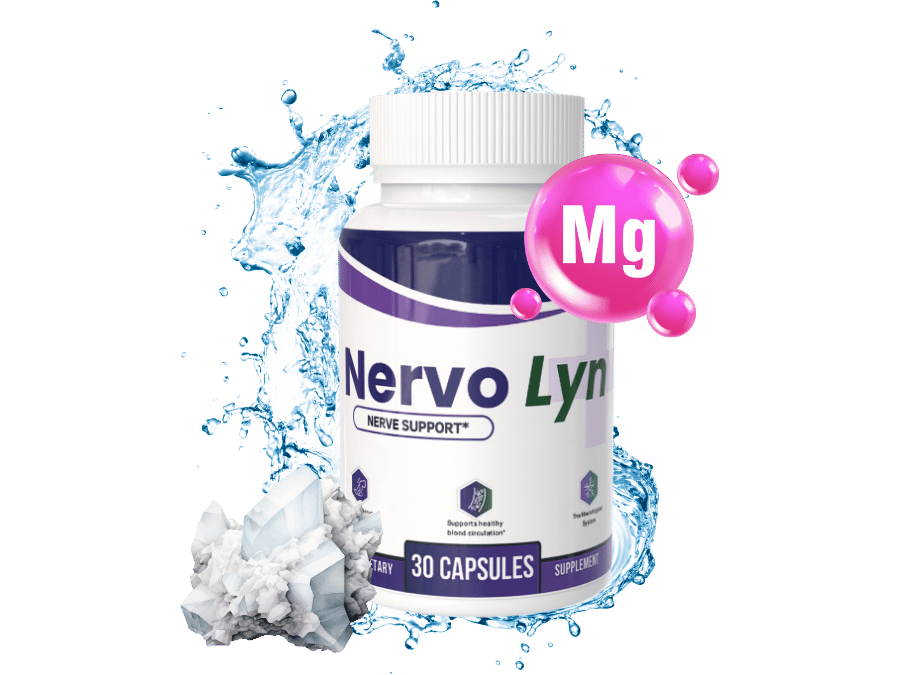
It was NervoLyn. Carol read the label the way she used to read a book report, looking for the part where somebody was fudging:
- Turmeric extract, standardized to 95% curcuminoids. For the body's normal inflammation response around stressed nerves. "That's the spice," Bev said. "Not what's in your cabinet."
- Butcher's broom. A traditional herb for circulation, to help blood make the long trip to the toes, which is exactly what a long car ride takes away.
- Alpha lipoic acid. An antioxidant the company describes as one of the most studied for the nerves of the hands and feet.
- Magnesium glycinate. The gentle form, which the company connects with calmer nerve signals and better sleep.
- L-carnitine and Coenzyme Q10. Fuel for the cells, so a worn nerve has the energy for its own slow repair.
Carol did it the careful way. She took a picture of the label to her doctor, who checked it against her blood pressure pill and her cholesterol pill, and told her to take it with breakfast and keep stopping every hour on the drive no matter what.
What Carol is watching for, and when
- Week 1. Nothing, and Bev told her not to expect anything. "It's not a heating pad."
- Weeks 2 and 3. Bev warned her the tingling might feel busier before it got calmer. Some people notice a nerve wake up before it settles, though nobody can promise how it goes for anyone else.
- Month 1. That's when Bev says the burning stopped following her into bed after a long day on the bench.
- Months 2 and 3. Where Bev is now: pedaling through the last hymn and walking down the porch steps without the railing.
Why so slow? Because nothing in that bottle numbs, heats or cools anything. A coating that wore thin over years gets rebuilt on the body's schedule, and the longest nerves get their turn last. The company says many people notice early changes in three to four weeks and fuller results over eight to twelve. Carol has three weeks until the drive. She knows that won't be the whole answer by Thanksgiving, so she ordered the three-month supply. "This one's for Christmas," she said. "And for Easter."
If the cushion, the socks and the gas station laps are what get you through a long sit, and your feet still burn all night afterward, this is the bottle Bev set down next to the pie.
See the label Carol read at the halfway stop →Who it's for, and who it isn't
It may be worth a look if you're over 50, the tingling, burning or numbness is in both feet and flares after long sits, your doctor has checked the basics (blood sugar, B12, thyroid), and what you've tried so far only makes the sitting easier without changing what happens afterward.
It is not for you if the symptoms came on suddenly or only on one side, if a foot or leg feels weak, if a calf is swollen and painful, or if you have a sore that isn't healing. Those need a doctor first. If you take medicine for blood sugar, blood pressure, blood thinning, thyroid or nerve pain, have kidney problems, or are pregnant or nursing, show your doctor the label before you start, and never stop a prescription on your own.
The company gives you 60 days, with your money back if your feet don't notice. It's a one-time order, nothing that renews behind your back, made in the United States in a GMP-certified facility. "Sixty days," Carol said, counting on her fingers like she was back at the chalkboard. "That's the drive home from Christmas."
There's Thanksgiving, then Christmas, then a long winter of church pews and dinner tables. Every long sit between now and spring is another night of burning. Carol wishes she'd asked Bev on the porch last year instead of driving home quiet.
Give your feet more than a better seat cushion →So, why is neuropathy worse after sitting?
Because a long sit slows blood flow to the feet, presses on nerves, and lets the feet swell, and nerves whose protective coating has already worn thin are the first to complain, especially when you stand up and everything wakes at once. Stop every hour, move your ankles, keep your shoes loose and your feet warm, and get seen right away for a swollen, painful calf. Those habits make the trip easier. The worn coating and the weak circulation underneath are a slower, daily project. Results with any supplement vary from person to person, and Bev's and Carol's are their own.
P.S. Carol asked me to ride along this year so she can take the passenger seat for the second half and do her ankle circles. I said yes, as long as we stop at Bev's. If you're the one sitting in the driveway a minute before you trust your feet on the ice, here's what Bev keeps next to her hymnals. And if the cold is making it worse this month, read why neuropathy flares when the weather turns.
I'll send you the next one
— Denise
No spam, no daily noise. Just what I actually did, written the way I actually lived it, sent when I write it.
Thanks — you're on the list.
This is a first-person account shared with Health Choice Review and is not medical advice, a diagnosis, or a recommendation of any treatment or product. Nerve symptoms and their causes vary between individuals. Always consult a licensed physician about your own health, and never start, stop or change a treatment based on anything you read here.