Red light therapy for neuropathy? My sister bought the $289 foot pad in October. Her feet still feel like cardboard.
Carol is 70 and taught fourth grade for thirty-four years. The glowing pad calmed the burning some nights and never touched the numbness. Here's what red light can and can't do for neuropathy feet, and what the neighbor on the porch swing walked across the lawn with.


My older sister Carol is seventy and taught fourth grade in Lexington for thirty-four years. She does her homework. So when the numbness in her feet started climbing past her ankles this summer, she read everything, and in October, during one of those two-day sales, she bought a red light therapy pad for her feet. Two hundred and eighty-nine dollars. Twenty minutes a night, the box said, on the couch with the TV on.
Last night she texted me a photo of her feet glowing red on the ottoman and one line: "Week four. Still feel like I'm walking on cardboard. Do I send it back?" Then she typed red light therapy for neuropathy into her phone, the same thing thousands of women are typing this fall, and called me when the answers disagreed with each other.
Red light therapy for neuropathy: what it can and can't do
Red and near-infrared light (doctors call it photobiomodulation) is being studied for nerve pain, and some people do report less burning and better sleep while they use it. The honest picture right now is mixed:
- The research is still early. Small studies show pain relief for some people; others see nothing. Reviews published this year still describe the evidence as limited and the results as varied. It hasn't been shown to reliably reverse neuropathy.
- Home pads are weaker than clinic devices. The power, the wavelength and the distance from the skin all matter, and the boxes aren't always clear about any of them.
- It works on the skin it touches. Like a patch or a cream, it reaches the ends of the nerves in the feet. It doesn't do anything about why the feet went numb in the first place.
- Be careful with heat. Some pads get warm. Numb feet can't always feel a burn, so check your skin after every session.
- Talk to your doctor first if you have diabetes with a foot wound, take medicine that makes you sensitive to light, or have had skin cancer on your feet or legs.
See a doctor quickly if the numbness is spreading fast, is only on one side, or comes with weakness, a sore that won't heal, or trouble keeping your balance.
Carol did it right. It helped a little, but…
To be fair to the pad, it did something. Carol says the burning in the balls of her feet is quieter on the nights she uses it, and she falls asleep easier, which at seventy is not nothing. She uses it every night, the full twenty minutes, exactly as the box says. My sister has never skipped a step of instructions in her life.
But the numbness is the same. The cardboard soles. The way she has to look down to know where the bottom stair is. The slipper she lost in the yard without noticing it came off. "So it's a nice warm feeling on the outside," she said, "and nobody's home on the inside."
That's the part the device ads skip. Light on the skin can calm a nerve ending that's misfiring. It can't, by itself, rebuild what's been worn away along the length of the nerve, or get more blood to the far end of a nerve that's been going without for years.
What's actually wearing the feet down
The nerves that run to your toes are the longest in your body, and each one is wrapped in a thin protective coating, like the insulation on a lamp cord. When that coating wears thin, the signal leaks. Some of it comes out as burning and buzzing, which is the part a pad or a patch can quiet. Some of it never arrives, and that's the numbness, which nothing on the outside of the foot can reach.
What wears that coating down, the way it was explained to Carol, is two slow things working together: a quiet, low-grade inflammation around nerves that are already stressed, and poor blood flow to the very end of the line, where the feet get served last. And now that the clocks have gone back and the nights are long and cold, those little vessels in the feet tighten up even more. That's why so many of you write to me that your feet got worse in November.
There's a common kitchen spice that keeps showing up in the research on that first part. But the jar on the spice rack isn't the version that was studied, and the body barely absorbs it unless it's paired with something else. Which spice, what it goes with, and why the time of day matters, the red light box doesn't say. Carol's podiatrist hadn't mentioned it either.

The neighbor on the porch swing
Carol's neighbor Marjorie is seventy-three, a retired church pianist, and she had neuropathy in both feet for years. Carol remembers her wearing her husband's wool socks to the block party because her own shoes hurt. This October Marjorie was out on the porch swing every evening in plain house slippers, and one night she walked across the lawn to bring Carol a loaf of pumpkin bread without a jacket or a cane.
So Carol, being a teacher, asked the direct question: "Marjorie, what did you do to your feet?"
"I tried the gadgets, honey," Marjorie said. "The vibrating one, the light one, the socks with the little copper threads. Some of them felt nice." What changed things, she said, was something that went after the coating and the circulation from the inside, every morning, instead of working on the outside of the foot every night. She went back home and came back with the bottle.
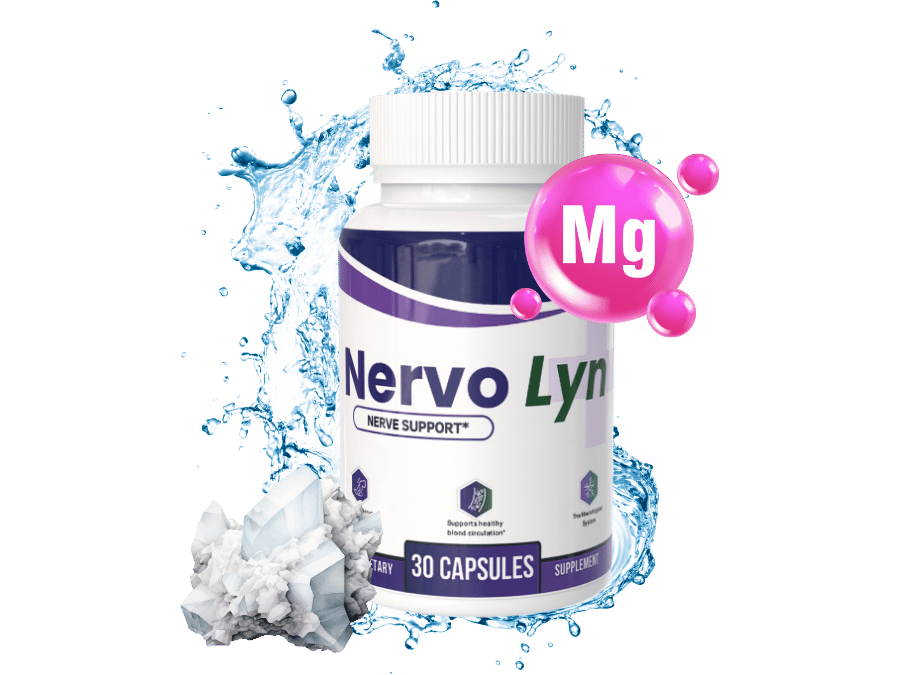
It was NervoLyn. Carol has graded thirty-four years of spelling tests, so she read the label twice, slowly, the way she'd read a permission slip:
- Turmeric extract, standardized to 95% curcuminoids. For the body's normal inflammation response around stressed nerves. "Not the jar on the spice rack," Marjorie said, and wouldn't say more than that.
- Butcher's broom. A traditional herb for circulation, to help blood make the long trip down to the toes, which is exactly what the cold nights are working against.
- Alpha lipoic acid. An antioxidant the company describes as one of the most studied for the nerves of the hands and feet.
- Magnesium glycinate. The gentle form, which the company connects with calmer nerve signals and better sleep.
- L-carnitine and Coenzyme Q10. Fuel for the cells, so a tired nerve has the energy for its own slow repair.
"So the pad is for tonight," Carol said, "and this is for next spring." She did it the careful way. She took the label to her doctor, who checked it against her blood pressure pill and her thyroid pill, told her she could keep using the pad if it helped her sleep, and said to take the capsules with breakfast and keep checking her feet every night.
What Carol is watching for, and when
- Week 1. Nothing to report. She told me so, in a text with a period at the end, which in our family means business.
- Weeks 2 and 3. Marjorie told her to expect pins and needles before anything better. Some people feel a nerve stirring before it settles, though nobody can promise what it means for anyone else.
- Month 1. Marjorie says that's when the nights got easier for her, and she stopped needing the gadgets to fall asleep.
- Months 2 and 3. Where Marjorie is now: slippers on the porch, pumpkin bread across the lawn, feeling the grass through the soles.
Why so slow? Because nothing in that bottle numbs or warms anything. A coating that wore thin over years gets rebuilt on the body's own schedule, and the longest nerves get their turn last. The company says many people notice early changes in three to four weeks and fuller results over eight to twelve. Carol ordered the three-month supply. "The pad got five weeks," she said. "This gets a whole season."
If you're sitting with your feet under a glowing pad every night and they still feel like cardboard in the morning, this is the bottle Marjorie walked across the lawn with.
Read the label Carol read twice →Who it's for, and who it isn't
It may be worth a look if you're over 50, the numbness, tingling or burning is in both feet, your doctor has checked the basics (blood sugar, B12, thyroid), and the things you've tried, devices included, calm the burning for an evening without ever touching the numbness underneath.
It is not for you if the symptoms came on suddenly or only on one side, if a foot or leg feels weak, or if you have a sore that isn't healing. Those need a doctor first. If you take medicine for blood sugar, blood pressure, blood thinning, thyroid or nerve pain, have kidney problems, or are pregnant or nursing, show your doctor the label before you start, and never stop a prescription on your own.
The company gives you 60 days, with your money back if your feet don't notice. It's a one-time order, nothing that renews behind your back, made in the United States in a GMP-certified facility. "Sixty days," Carol said. "The red light store only gave me thirty to return the pad. This is the better deal."
Every long November night the coating goes without, it stays a little thinner. Carol wishes she'd walked across the lawn in September instead of buying the pad in October.
Work on the inside of the foot this winter →So, does red light therapy help neuropathy?
It may help some people with burning and sleep, and it's generally gentle when used as directed, but the research is still early and it hasn't been shown to reverse neuropathy. Check your skin after every session, keep the device away from open sores, and if your feet are still numb after several weeks, take that to your doctor rather than buying the next gadget. A light on the skin doesn't reach the two things that keep the feet numb: the worn coating and the poor blood flow at the end of the line. Results with any supplement vary from person to person, and Marjorie's and Carol's are their own.
P.S. Carol didn't return the pad. She uses it on Sunday nights now, "for the ambiance," and last Thursday she walked out to get the mail in her slippers and came back with both of them still on. If you're the one on the couch with your feet glowing red and the cardboard feeling still there in the morning, here's what Marjorie brought across the lawn. And if your doctor has you on lidocaine patches too, read what happened to my neighbor Bonnie first.
I'll send you the next one
— Denise
No spam, no daily noise. Just what I actually did, written the way I actually lived it, sent when I write it.
Thanks — you're on the list.
This is a first-person account shared with Health Choice Review and is not medical advice, a diagnosis, or a recommendation of any treatment or product. Nerve symptoms and their causes vary between individuals. Always consult a licensed physician about your own health, and never start, stop or change a treatment based on anything you read here.