Vitamin D for neuropathy? My friend took it for nine weeks. Her blood test got better. Her feet didn't.
Marlene is 68 and carried mail on a rural route for thirty-one years. The vitamin D fixed her lab number and her energy, and never reached the cardboard feeling under her feet. Here's what vitamin D can and can't do for neuropathy, and what the retired lineman across the road set down on his kitchen table.


My friend Marlene is sixty-eight and carried mail on a rural route outside Ames for thirty-one years. Gravel roads, a right-hand-drive Jeep, out of the seat and back in at every box. She has walked more miles than anyone I know, and for the last couple of years her feet have been paying it back: a burning in both soles at bedtime, tingling in her toes, and a numbness on the balls of her feet that she says "feels like I'm standing on folded-up cardboard."
In September her doctor ran blood work and found her vitamin D low. Eighteen, she told me, when it should be thirty or more. He put her on a daily D3 and said it might help her nerves. So for nine weeks she has taken it every morning with her coffee. Last Sunday, on the phone, she asked me what she's really been asking herself: "Denise, I feel less tired. My mood is better. My feet are exactly the same. Is vitamin D for neuropathy a real thing, or did I just fix something else?"
Vitamin D for neuropathy: what the research actually says
This is one of the questions I get most in November, and it makes sense: the days get short, we're indoors, and a lot of us are low. Here's the honest picture:
- Low vitamin D and neuropathy show up together. Large reviews find that people who are truly deficient are more likely to have nerve problems in the feet, and the link is stronger in people with diabetes. That's an association. It doesn't prove the low D caused the nerve damage.
- Correcting a deficiency may help some people. A few small studies suggest that bringing a low level back up eased nerve pain in some patients. The evidence that extra vitamin D helps people whose level is already normal is thin.
- Get tested before you dose. The blood test is called 25-hydroxy vitamin D. Very high doses taken for months without testing can raise calcium in the blood and cause real harm. Your doctor picks the dose.
- Take it with food that has some fat in it, like breakfast with eggs or a little butter. It's absorbed better that way.
- The November sun won't do it for you. In most of the northern half of the country, the winter sun sits too low for your skin to make much vitamin D, even on a clear day.
See a doctor quickly if the numbness is spreading fast, is only on one side, or comes with weakness, a sore you didn't feel, or trouble keeping your balance.
Marlene did the sensible things. Each one helped, but…
Before the vitamin D there were the cushioned insoles from the drugstore, the wool socks her daughter knit her, and a foot massager she plugs in during the evening news. Marlene's not a complainer. She'd tell you every one of those things was worth the money. The insoles made the cardboard feel a little softer. The massager felt good for exactly as long as it was running.
"And the vitamin D made me feel more like myself," she said, "except from the ankles down." She's right, and she put her finger on it better than most of the people who write to me. Every one of those things either worked on how her feet feel in the moment, or fixed a number on a lab sheet. None of them reached what's going on along the nerve itself.
What's really going on along the nerve
The nerves that run to your toes are the longest in your body, and each one is wrapped in a thin protective coating. Marlene's neighbor across the road, who you'll meet in a minute, explained it to her better than any pamphlet. He strung power lines for forty years. "When the insulation on a line gets brittle," he told her, "two things happen. Some of the current leaks out and crackles. Some of it never gets to the end of the line." In feet, the crackle is the burning and buzzing. What never arrives is the cardboard.
A vitamin can fill a gap the body was missing. A massager can quiet the crackle for an evening. But a brittle coating usually has two slow things working on it together: a low-grade inflammation around nerves that are already stressed, and weak blood flow to the very end of the line, where the feet get served last. And the cold mornings we're in now tighten those little vessels in the feet even more.
Here's the part Marlene's doctor didn't bring up. A spice most of us have in the cabinet keeps turning up in the research on that inflammation around the nerve. Not the jar on the rack, though. The body barely absorbs it on its own, it needs a partner to get in, and when you take it seems to matter. Which form, with what, and at what hour, none of that comes on the back of a vitamin D bottle.

The retired lineman across the road
Walt is seventy-four, a widower, and climbed utility poles for the electric co-op until his knees retired him. Last winter Marlene used to see him shuffle to his mailbox in house slippers, one hand on the fence, because his feet "didn't know where the ground was." This fall she watched him out at the end of his driveway on a ladder, stringing Christmas lights on the gutter in his work boots, two weeks earlier than anybody else on the road.
She carried mail for thirty-one years. She knows how to walk up to a man's door and ask a direct question. "Walt, what happened to your feet?"
"Same thing that happens to a line," he said. "You can keep patching where it sparks, or you can work on the whole wire." He'd tried the vitamin D too, he said, back when his doctor found him low. It was fine for his energy. What changed his feet was working on the wire every morning, from the inside, for a whole season. He went to the cupboard next to the coffee maker and set the bottle down in front of her.
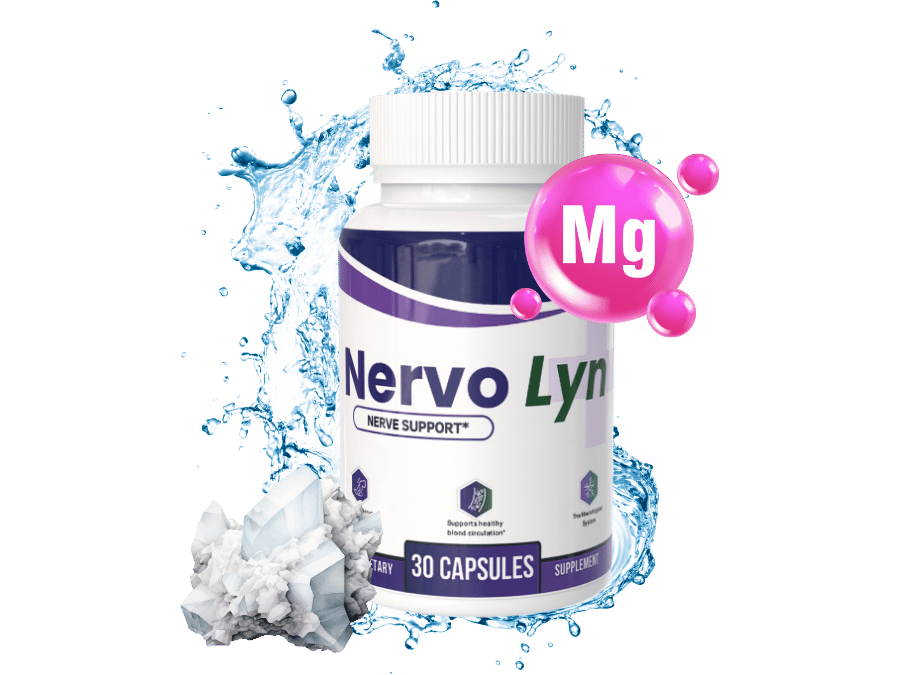
It was NervoLyn. Marlene read the label the way she used to read a smudged address, slowly, holding it at arm's length:
- Turmeric extract, standardized to 95% curcuminoids. For the body's normal inflammation response around stressed nerves. "That's the spice," Walt said. "Not the kind from the grocery store."
- Butcher's broom. A traditional herb for circulation, to help blood make the long trip down to the toes on cold mornings.
- Alpha lipoic acid. An antioxidant the company describes as one of the most studied for the nerves of the hands and feet.
- Magnesium glycinate. The gentle form, which the company connects with calmer nerve signals and better sleep.
- L-carnitine and Coenzyme Q10. Fuel for the cells, so a worn nerve has the energy for its own slow repair.
"So the vitamin D is the fuse box," Marlene said, "and this is the line." She did it the careful way. She took a picture of the label to her doctor, who checked it against her blood pressure pill and her vitamin D, told her to keep taking the D3 exactly as prescribed, and to take the new one with breakfast.
What Marlene is watching for, and when
- Week 1. Nothing, and Walt told her not to expect anything. "A line doesn't heal because you looked at it," he said.
- Weeks 2 and 3. Walt warned her it might feel like more tingling before it got better. Some people notice a nerve wake up before it settles down, though nobody can promise how it goes for anyone else.
- Month 1. That's when Walt says the bedtime burning stopped showing up every night, and he quit keeping the slippers by the door.
- Months 2 and 3. Where Walt is now: up a ladder in work boots, feeling the rungs.
Why so slow? Because nothing in that bottle numbs, heats or cools anything. A coating that wore thin over years gets rebuilt on the body's schedule, and the longest nerves get their turn last. The company says many people notice early changes in three to four weeks and fuller results over eight to twelve. Marlene ordered the three-month supply. "Nine weeks of vitamin D taught me something," she said. "Give a thing a whole season or don't bother."
If your vitamin D came back fine, or came back low and you fixed it, and your feet still feel like cardboard every morning, this is the bottle Walt set down on his kitchen table.
See the label Marlene read at Walt's table →Who it's for, and who it isn't
It may be worth a look if you're over 50, the tingling, burning or numbness is in both feet, your doctor has checked the basics (blood sugar, B12, thyroid, and vitamin D if you're at risk of being low), and what you've tried so far either helps for an evening or fixes a lab number without ever reaching your feet.
It is not for you if the symptoms came on suddenly or only on one side, if a foot or leg feels weak, or if you have a sore that isn't healing. Those need a doctor first. If you take medicine for blood sugar, blood pressure, blood thinning, thyroid or nerve pain, have kidney problems, or are pregnant or nursing, show your doctor the label before you start, and never stop a prescription on your own.
The company gives you 60 days, with your money back if your feet don't notice. It's a one-time order, nothing that renews behind your back, made in the United States in a GMP-certified facility. "Sixty days," Marlene said. "That's Christmas. If I can stand in the kitchen through Christmas dinner, I'll know."
Every short, cold day between now and March is another day the far end of the line goes without. Marlene wishes she'd crossed the road in September instead of waiting nine weeks on a pill that was only ever going to fix her blood test.
Work on the whole wire this winter →So, does vitamin D help neuropathy?
If you're truly low, correcting it is worth doing for your whole body, and for some people it may ease nerve pain. Get the blood test, let your doctor pick the dose, take it with a meal, and don't megadose on your own. If your level is already normal, more vitamin D is unlikely to change your feet, because it doesn't reach the two things that keep them burning and numb: the worn coating along the nerve and the poor blood flow at the end of the line. Results with any supplement vary from person to person, and Walt's and Marlene's are their own.
P.S. Marlene says Walt has offered to string her lights too, as long as she holds the ladder. She told him she'd like to be able to feel the ground while she does it. If you're the one taking the vitamin D faithfully and still standing on cardboard, here's what Walt keeps next to his coffee maker. And if the cold mornings are making it worse, read why neuropathy flares when the weather turns.
I'll send you the next one
— Denise
No spam, no daily noise. Just what I actually did, written the way I actually lived it, sent when I write it.
Thanks — you're on the list.
This is a first-person account shared with Health Choice Review and is not medical advice, a diagnosis, or a recommendation of any treatment or product. Nerve symptoms and their causes vary between individuals. Always consult a licensed physician about your own health, and never start, stop or change a treatment based on anything you read here.